


How to Prep Ingredients Once and Cook Better All Week
Weeknight cooking feels much easier when a few small jobs are already done. Herbs washed and dried. A container of cooked rice is waiting in the fridge. Vegetables chopped before the pan is hot. These small kitchen habits can turn a rushed Tuesday dinner into something that still feels fresh and homemade.
This is not the kind of meal prep that asks you to eat the same lunch five days in a row. It is a more flexible approach: prepare useful ingredients once, then combine them in different ways throughout the week. With a little planning, you can make tacos, grain bowls, soups, salads, pasta, stir-fries, and quick lunches without starting from scratch every time.
The goal is simple. Prep the ingredients that slow you down most, store them where you can see and use them, and build meals from components that fit the way you already cook.
Start With the Meals You Actually Make
Before washing lettuce or chopping onions, take a look at what you truly cook in a normal week. Not the recipes you save and never make, but the meals that keep showing up on your table.
Maybe tacos are a regular Tuesday dinner. Maybe pasta is the fallback when everyone is tired, grain bowls are the easiest way to use vegetables, or scrambled eggs are what happens when dinner needs to come together fast. Those patterns matter. They tell you which ingredients are worth prepping and which ones might sit untouched.
Choose three to five meals you already rely on. These become your starting point. A household that often eats chicken, rice, roasted vegetables, and salads does not need a complicated system. It needs washed greens, cooked grains, a ready protein, and vegetables that are easy to roast, sauté, or toss into a bowl.
Look for overlap. Chopped onions can go into soups, sauces, stir-fries, and egg dishes. Roasted sweet potatoes can become a side dish, a grain bowl topping, or a breakfast hash. A simple dressing can finish salads, roasted vegetables, sandwiches, or grilled chicken.
The best ingredient prep does not force you into a new lifestyle. It supports the food you already like to cook.
Prep the Ingredients That Save the Most Time
Some kitchen tasks take only a few minutes, but they feel bigger when you are hungry and tired. Chopping vegetables, washing greens, cooking grains, trimming protein, and making sauces are all easier when you do them before the dinner rush.
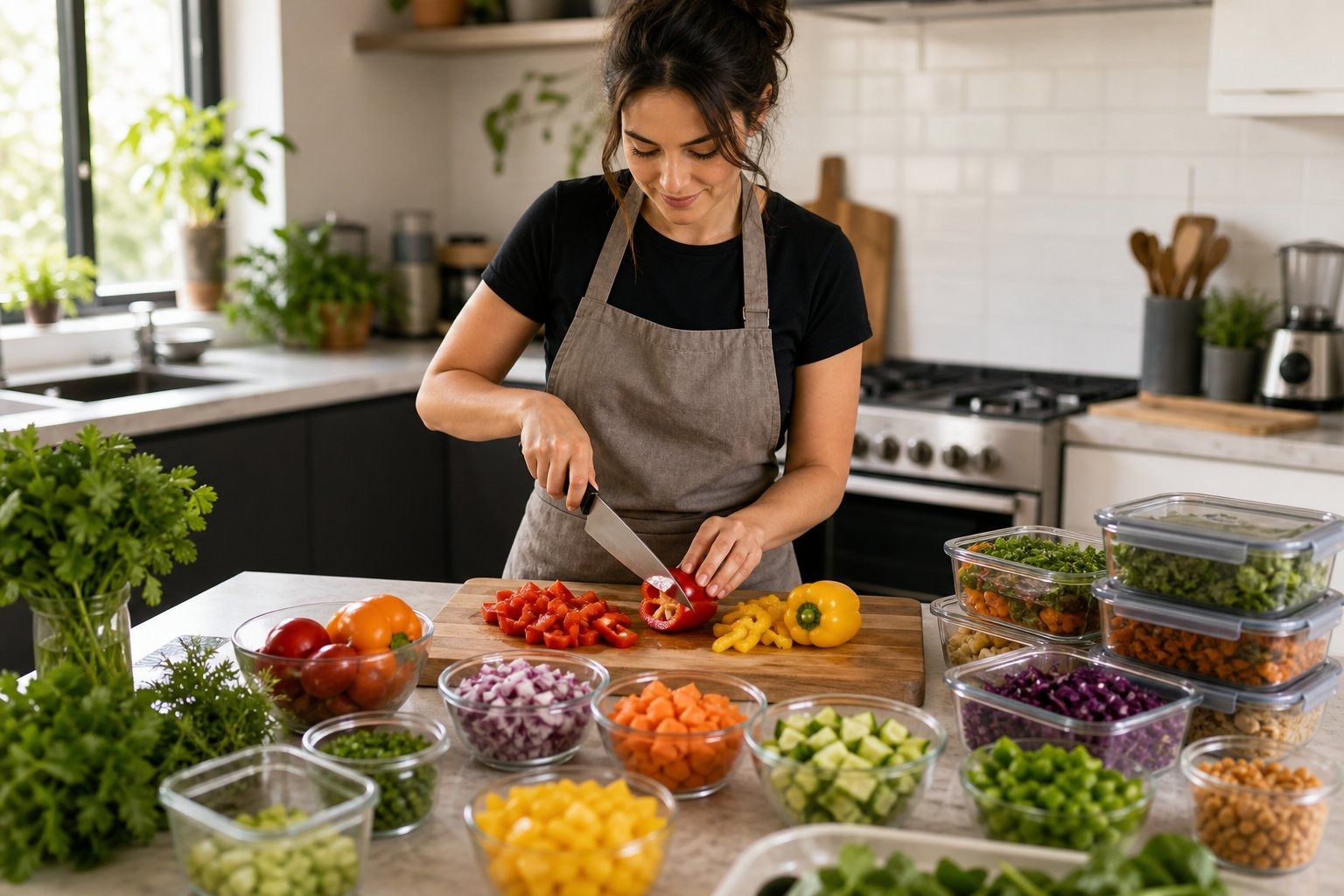
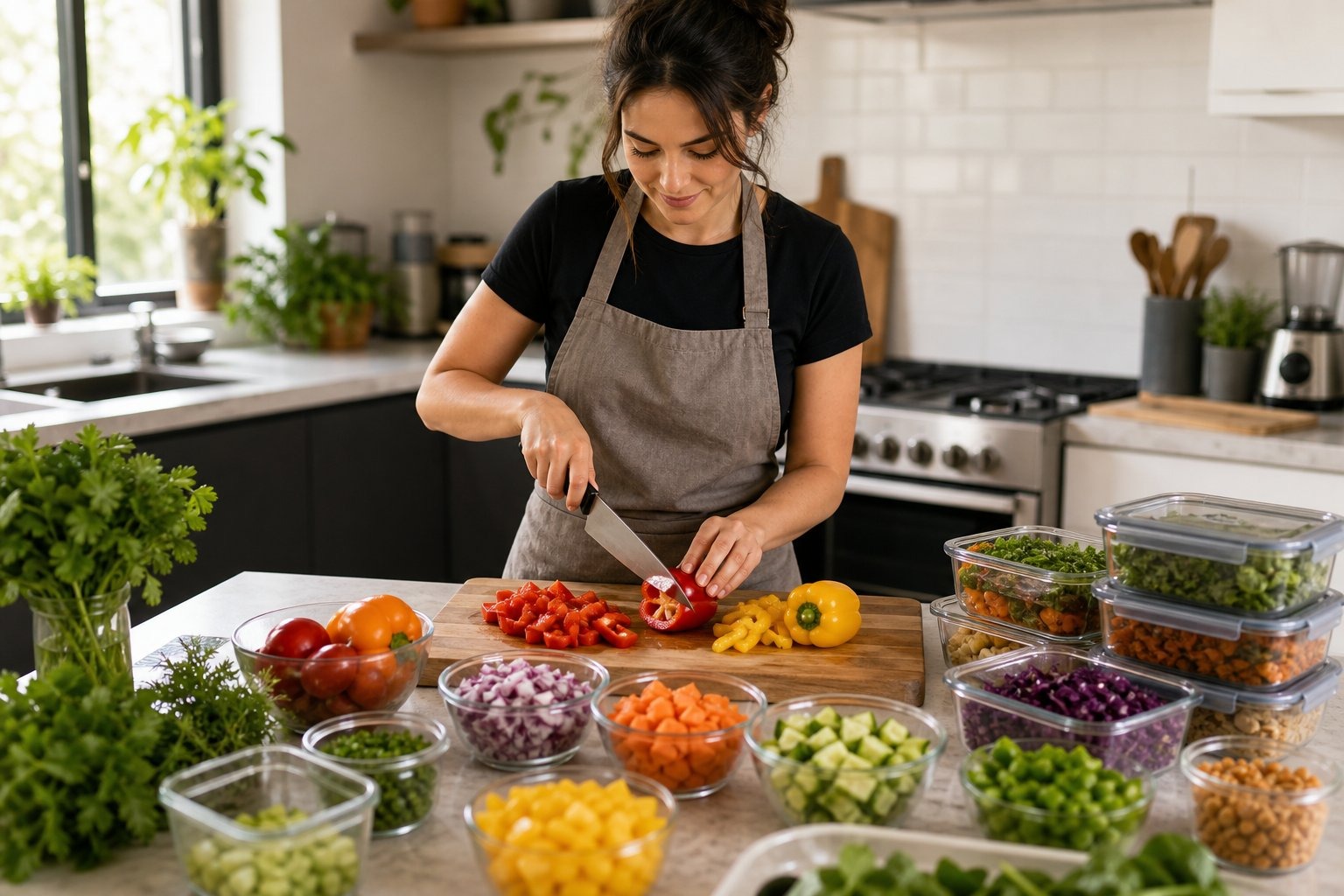
Start with the ingredients that appear in several meals. Cook a pot of rice, quinoa, farro, or lentils. Roast a tray of vegetables. Wash and dry salad greens. Chop onions, carrots, celery, peppers, or mushrooms if you know you will use them within a few days.
Proteins can also be handled ahead with a little care. Chicken, tofu, hard-boiled eggs, beans, and lentils all work well across multiple meals. A simply seasoned protein is often the most useful because you can take it in different directions later. Add it to tacos one night, a salad the next, and soup or pasta later in the week.
Sauces are another small effort with a big payoff. A vinaigrette, salsa, yogurt sauce, herb dressing, or quick marinade can make basic ingredients feel intentional. Even leftovers taste better when you have something bright or creamy to bring them back to life.
For a realistic weekly prep session, choose only a few tasks: wash and dry greens or herbs, cook one grain or legume, roast one or two vegetables, prepare one protein, and make one sauce or dressing. That is enough to make the week easier without turning your afternoon into a full cooking marathon.
Store Prepped Food So It Stays Useful
Ingredient prep only works when the food stays fresh, visible, and easy to grab. A fridge full of unlabeled containers can become just as frustrating as a fridge full of unwashed produce.
Think about storage as part of the cooking process. Clear containers are useful for cooked grains, chopped vegetables, and leftovers because you can see what needs to be used. Small jars work well for dressings, sauces, and chopped herbs. Resealable bags can save space in the freezer, especially when soups, sauces, grains, or proteins are portioned flat.
Match the storage method to the ingredient. Greens need to be dry before they go into the fridge, often with a towel to absorb extra moisture. Cooked grains should cool before they are covered and refrigerated. Soups, sauces, and proteins should be divided into practical portions so you are not thawing more than you need.
For cooks who regularly prep proteins, grains, sauces, or freezer portions, a mix of jars, clear containers, reusable bags, and other food vacuum storage solutions can help keep ingredients organized without making the system feel complicated.
Labeling matters too. Add the name and date before anything goes into the fridge or freezer. It takes a few seconds, but it prevents the familiar guessing game later in the week.
As a general guide, cooked proteins are best used within three to four days in the refrigerator. Cooked grains usually keep for several days when stored properly. Raw poultry and seafood should be used quickly, often within one to two days, or frozen for later. When in doubt, rely on food safety guidance and discard anything that smells off, looks questionable, or has been stored too long.
Build Meals From Components, Not Full Recipes
Traditional meal prep often means cooking complete dishes in advance. That can work, but it can also make meals feel repetitive by Wednesday. Component cooking gives you more flexibility.
The idea is simple: prepare building blocks, then assemble them in different ways. A container of cooked rice does not have to become the same bowl every day. It can turn into fried rice, a side for curry, a base for grilled vegetables, or a filling for stuffed peppers.
The same approach works with proteins and vegetables. Roasted chicken can become tacos, salad, soup, or pasta. Roasted vegetables can go into wraps, omelets, grain bowls, or warm salads. Lentils can become a soup, a side dish, or a hearty lunch with greens and dressing.
Sauces help change the direction of a meal. The same roasted vegetables taste different with pesto, yogurt sauce, vinaigrette, salsa, or a squeeze of lemon and olive oil. Fresh finishes also matter. Herbs, toasted nuts, pickled onions, grated cheese, chili flakes, or citrus can make prepared ingredients feel fresh again.
This approach is useful because it leaves room for appetite and schedule changes. You may plan for grain bowls, then decide pasta sounds better. With components ready, the meal can still come together quickly.
Make Leftovers Part of the Plan
Leftovers are more useful when they are planned, not forgotten. Instead of waiting to see what remains after dinner, cook a little extra when the ingredient can work in another meal.
A roasted chicken can become tacos, sandwiches, soup, or a salad topping. Extra pasta sauce can be frozen in small portions. Roasted vegetables can move into frittatas, quesadillas, grain bowls, or wraps. Cooked rice can become fried rice, a soup addition, or a quick side dish.
The key is to avoid locking leftovers into the same exact meal. Keep the first round of seasoning fairly simple when possible, then add stronger flavors later. A lightly seasoned protein gives you more room to use different sauces, spices, and cooking styles throughout the week.
Portion leftovers before storing them. If something is likely to become lunch, pack it that way. If it belongs in the freezer, divide it into amounts that make sense for one meal. Label it before you put it away.
It also helps to plan fresh meals and leftover-based meals together. If you roast vegetables on Monday, decide whether they will become Wednesday’s pasta, Thursday’s omelet, or a quick lunch bowl. A small plan keeps good food from drifting to the back of the fridge.
Keep the Routine Simple Enough to Repeat
The best prep system is not the most impressive one. It is the one you can repeat on a normal week.
Start small. Cook one grain, prep one vegetable, wash one green, and make one sauce. That alone can support several meals. Once the habit feels natural, add more.
Choose a time that fits your life. Some people like Sunday afternoons after grocery shopping. Others prefer 20 minutes while dinner is already in the oven. The day matters less than the rhythm. Ingredient prep should feel like a helpful part of the week, not another project that needs perfect conditions.
Keep the tools basic too. A sharp knife, cutting board, sheet pan, pot, jars, and containers can handle most of the work. Too many gadgets can make the routine feel harder than it needs to be.
Pay attention to what actually gets eaten. If prepped bell peppers disappear quickly but chopped cucumbers always get soft before anyone uses them, adjust the plan. If cooked rice saves dinner twice a week, make it a regular part of the routine.
A useful system should become more personal over time. It should reflect your schedule, your favorite meals, and the ingredients your household reaches for most.
Final Thoughts
Ingredient prep is not about creating a perfect fridge or planning every bite in advance. It is about making home cooking feel more possible during the busiest parts of the week.
A few prepared ingredients can change the way dinner feels. Washed greens become an easy side. Cooked grains turn into bowls, soups, and quick lunches. Roasted vegetables make pasta, eggs, and wraps more satisfying. Leftovers become useful instead of forgotten.
Start with two or three ingredients if that feels more realistic. Build from there. When your fridge holds food that is ready to use, weeknight cooking becomes less about catching up and more about assembling something good with less effort.