

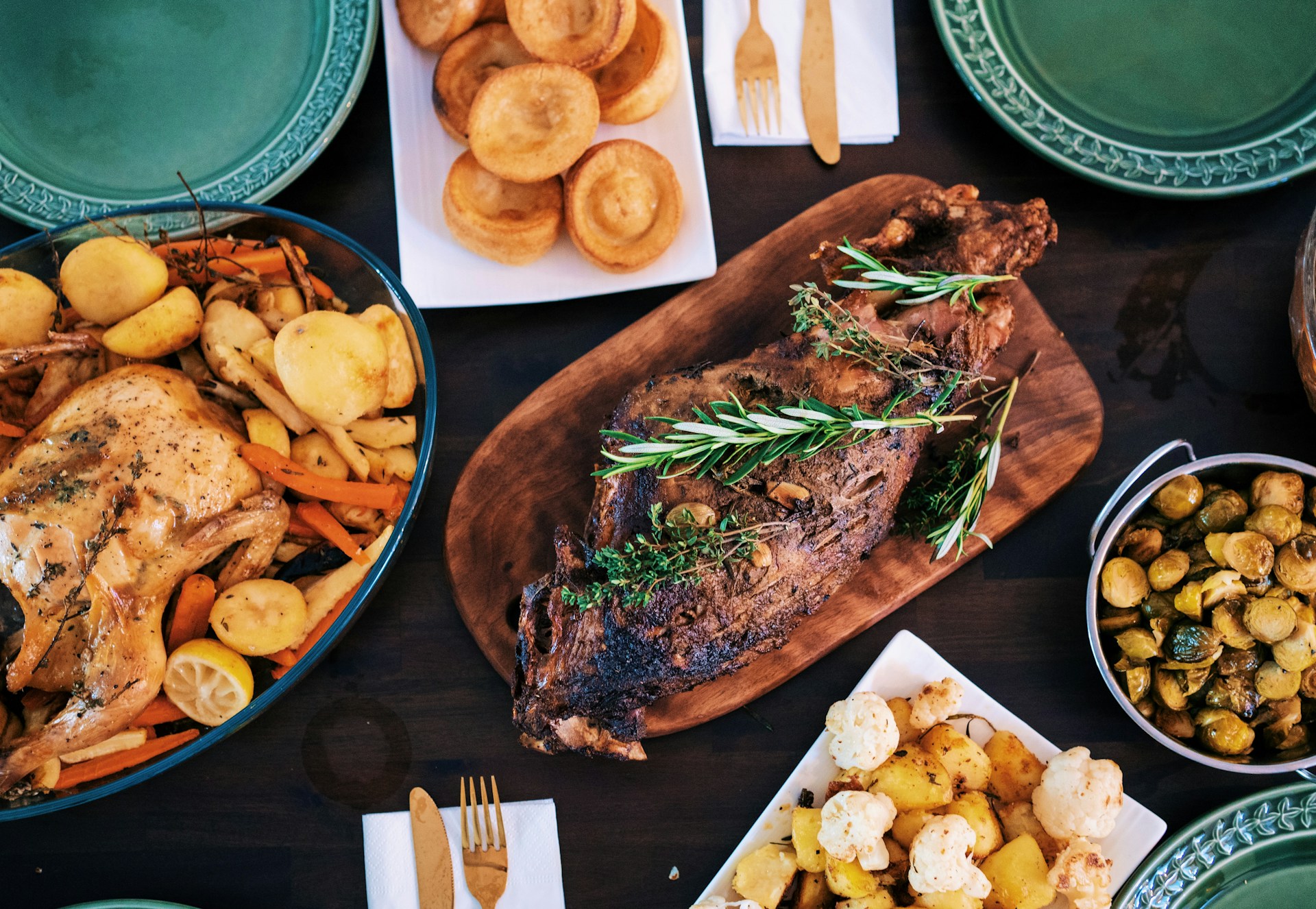

What Splits The Two Camps At The Kitchen Door
Cooking ability has less to do with it than most people assume. Confident cooks dread company all the time, and people who barely follow a recipe throw the kind of evening guests still bring up two years later. The difference lies in where your attention goes once the first coat comes off.
Hosting dread is built from three parts, and naming them helps, because they behave differently:
- Timing pressure. The worry that food arrives cold, late, or all at once.
- Evaluation. The sense that dinner is a verdict on the cook.
- The hand-off. The minute cooking stops and conversation starts, which some hosts experience as a cliff edge.
People who love hosting tend to have solved the third one without noticing. They talk while they stir, so there is no hand-off to fumble. Curiosity about your wiring runs in odd directions here. People reach for whatever framework helps them make sense of the split: some take personality inventories, others read up on temperament, and plenty turn to personality frameworks or family patterns for the same reason, and plenty compare notes on an astrology or birth chart page like birthcharts.asknebula.com, for the same reason they might ask a sibling why they host so differently. The question underneath is a fair one. Why does the same task feel like play to one person and like an exam to another?
Preparation Styles Set The Mood Before Anyone Arrives
The menu matters less than the shape of the schedule wrapped around it. A dish that needs plating at the last second turns the host into a line cook at the hour the room wants them sitting down. That choice, made two days early, decides most of what the night feels like.
The Front-Loader
Hosts who enjoy the evening build backwards from the doorbell. Braises that sit in a low oven. Salads are dressed at the table. Anything that improves while being ignored. A tray that goes in and stays in beats a better dish that needs standing over, which is why the oven version of a stirred dish suits company: baked risotto with sausage and tarragon frees the cook from twenty minutes at the stove.
The Improviser
Others cook in front of people on purpose, because an audience makes the work feel lighter and the chopping gives their hands something to do. This style falls apart in one situation, and the cause is the floor plan. A kitchen walled off from the room turns improvising into solitary confinement while the party carries on somewhere else.
Why Over-Catering Gives The Host Away
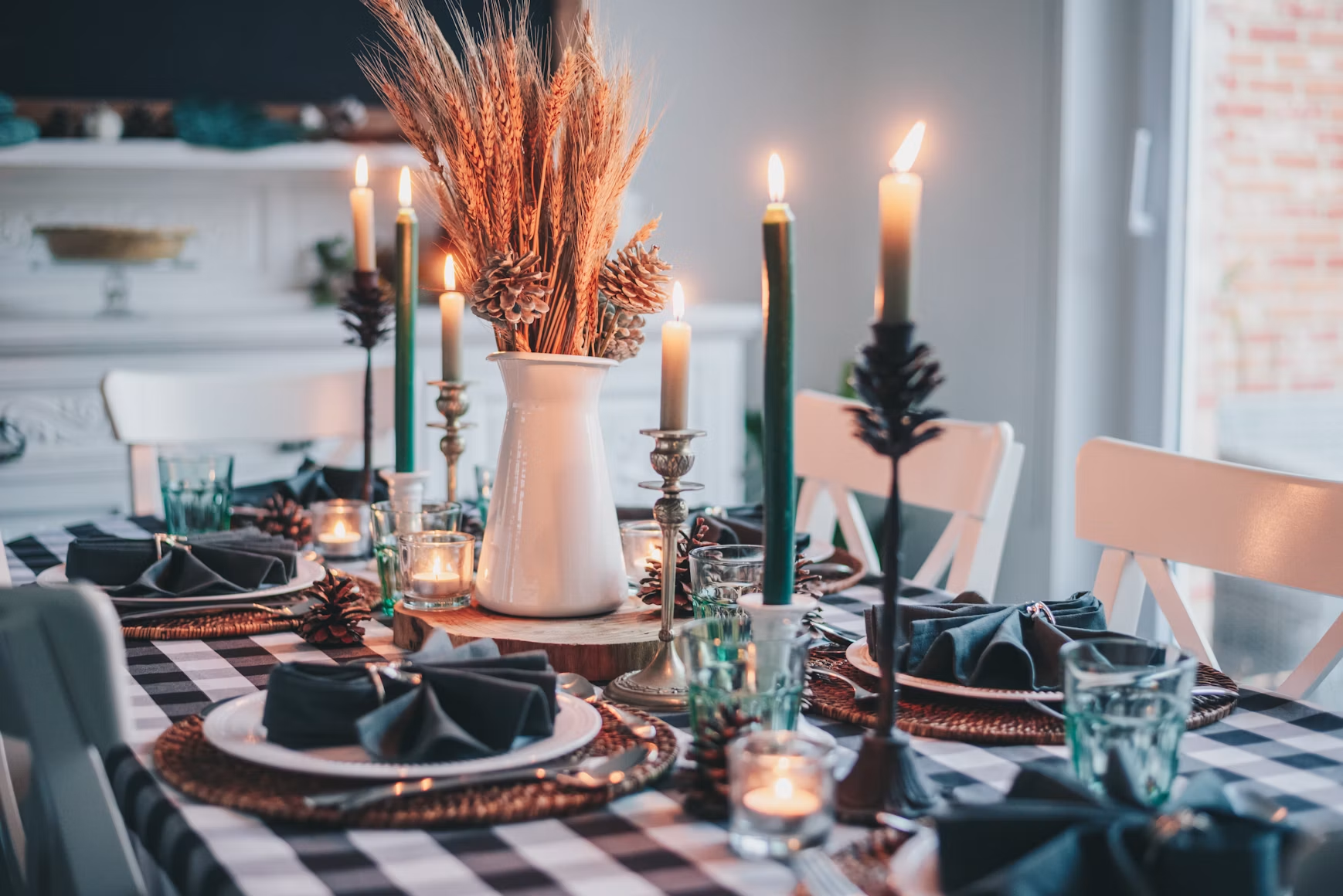
Dinner table with festive decorations
Count the dishes. A host who has made five mains for six people has already said something before speaking: they were bargaining. With too much of everything, no one leaves hungry, and nobody concludes the cook fell short.
The bargain rarely pays off. Guests eat what they eat, and a portion chart built on per-person estimates lands closer to reality than a host's nerves do. Meanwhile, the leftovers pile up in a country where more than a third of available food goes uneaten, a figure that starts looking personal once you have scraped three trays into the bin at midnight.
A few signs the quantity crept up on its own:
- A second main appeared after the guest list was already set.
- Two sides do the same job, one of them added for insurance.
- A store-bought dessert was added as backup for the one already made.
Trimming that list back takes more nerve than adding to it. Six people around one pot of something, with bread and a salad, reads as confidence. Six people facing a buffet read the room correctly and clock the nerves.
When A Meal Gets Performed Instead Of Shared
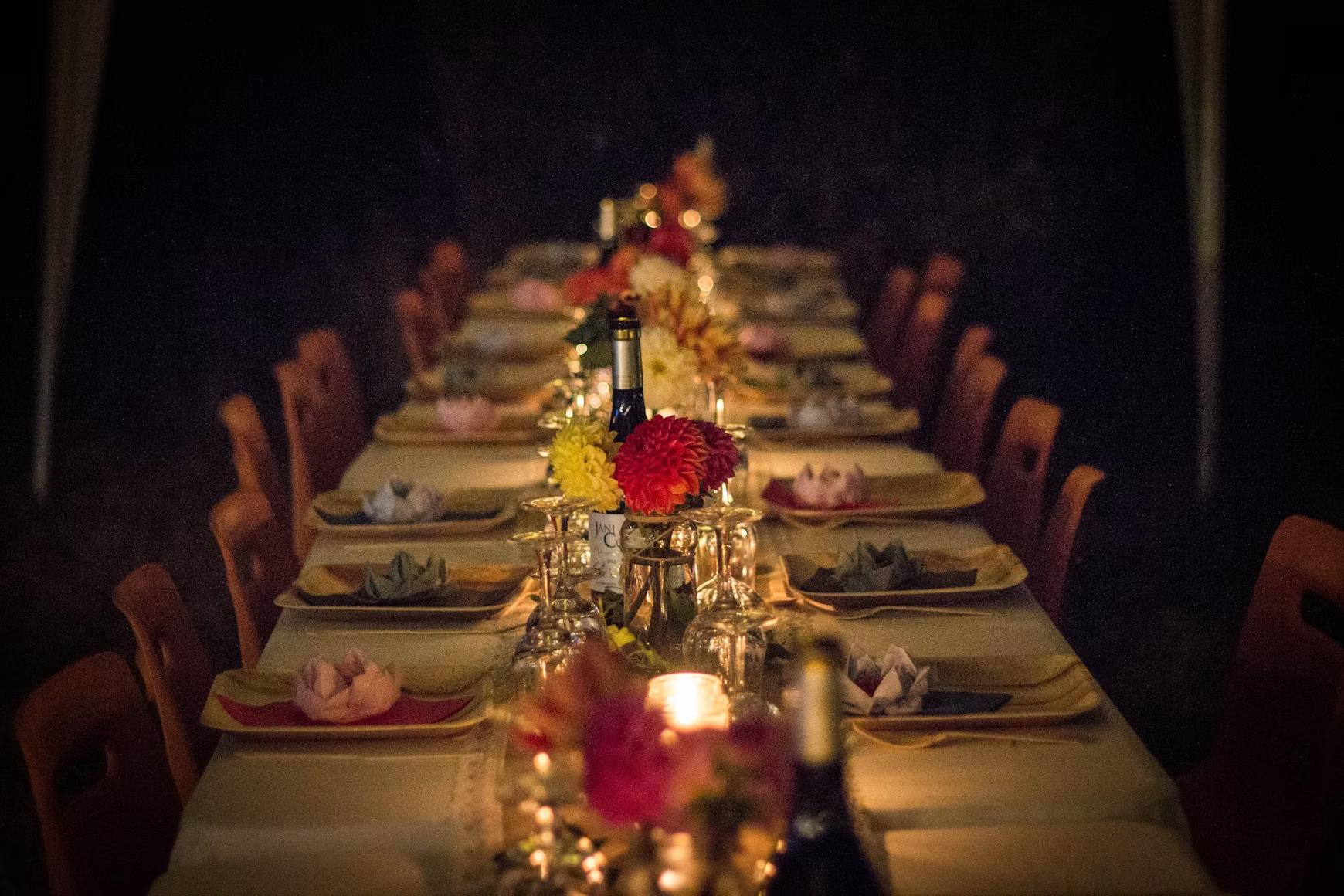
Long dinner table with festive flowers
Watch a host who is performing. The food arrives in courses, the plates get wiped at the edge, and every compliment gets deflected with a note about the crust. Nobody is allowed in the kitchen. The evening runs on rails, and it can be lovely. It is also a recital.
The sharing version looks messier and works differently. Someone else carries plates. The pot sits on a board in the middle of the table with a spoon in it. When the sauce splits, the host says so they pass the bread. Guests relax in proportion to how much they are allowed to help, which is why the easiest tables belong to hosts who have let go of a few details on purpose.
That distinction is what the dread is usually about. People who fear hosting picture a performance and correctly decide they don't want to give one. Nobody signed up to be reviewed in their own dining room. Treating the night as a shared meal removes the audience, and most of the timing panic leaves with it.
What To Actually Do If Hosting Makes You Anxious
If you are the anxious type, three changes remove most of the panic.
- First, cook make-ahead dishes: braises, baked pasta, and anything that improves in a low oven, so you greet guests instead of standing at the stove.
- Second, do not over-cater. For six adults, plan on one main plus two sides, not two mains, and let a simple bread and salad round it out; extra food reads as nerves, not generosity.
- Third, close the hand-off by cooking something communal, a pot or board in the middle of the table, so the evening never splits into kitchen work and a party.
Which brings the doorbell back around. It still rings at seven, the food is still not quite finished, and the difference between the two cooks is not talent but the question each one is answering. One is asking whether the meal will be good enough. The other is asking who is coming through the door. If you dread the night, the fix is rarely to cook better; it is to stop staging a performance and host a shared meal instead: pick dishes that hold, put the pot on the table, and let your guests help.